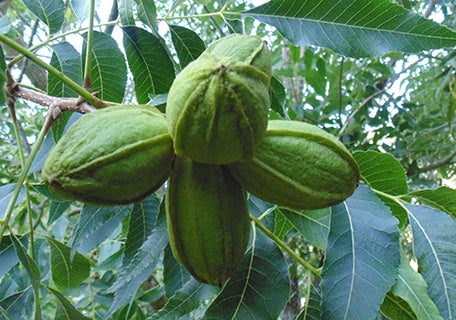
Pecans (Carya illinoensis)
Pecans are majestic, long-lived native deciduous trees that can survive 300+ years while producing generations of delicious, nutritious nuts. These spectacular shade trees reach 70 feet tall and wide with luxuriant green pinnate foliage that creates commanding presence in large landscapes. Native from Mexico through the Gulf states to southern Illinois and Iowa, pecans are deeply rooted in American agricultural heritage and provide some of the most flavorful and versatile nuts for fresh eating, baking, and cooking.
The rich, buttery nuts ripen in fall, typically harvesting in October when they drop naturally from the tree for easy collection. Pecans perform best in areas with hot summers that allow nuts to fully mature and develop their characteristic sweet, oily flavor. There is significant variation in cold hardiness and ripening time between cultivars, making variety selection critical for success. Northern growers must choose hardy, short-season varieties bred for cooler climates and shorter growing seasons to ensure reliable nut maturity before frost. At least two compatible varieties are required for cross-pollination and good nut production.
Hardy across USDA Zones 5-9 with proper variety selection, pecans are ideal for large properties, parks, and legacy plantings seeking productive shade trees with multi-generational value and native heritage.
Pecans (Carya illinoensis)
Pecans are majestic, long-lived native deciduous trees that can survive 300+ years while producing generations of delicious, nutritious nuts. These spectacular shade trees reach 70 feet tall and wide with luxuriant green pinnate foliage that creates commanding presence in large landscapes. Native from Mexico through the Gulf states to southern Illinois and Iowa, pecans are deeply rooted in American agricultural heritage and provide some of the most flavorful and versatile nuts for fresh eating, baking, and cooking.
The rich, buttery nuts ripen in fall, typically harvesting in October when they drop naturally from the tree for easy collection. Pecans perform best in areas with hot summers that allow nuts to fully mature and develop their characteristic sweet, oily flavor. There is significant variation in cold hardiness and ripening time between cultivars, making variety selection critical for success. Northern growers must choose hardy, short-season varieties bred for cooler climates and shorter growing seasons to ensure reliable nut maturity before frost. At least two compatible varieties are required for cross-pollination and good nut production.
Hardy across USDA Zones 5-9 with proper variety selection, pecans are ideal for large properties, parks, and legacy plantings seeking productive shade trees with multi-generational value and native heritage.