Flowering Quinces
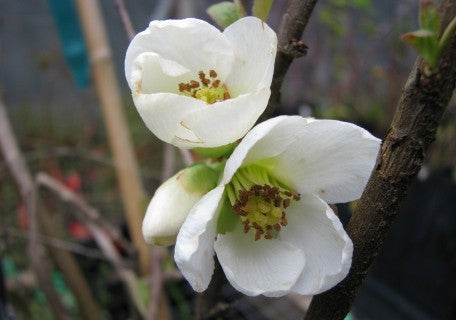
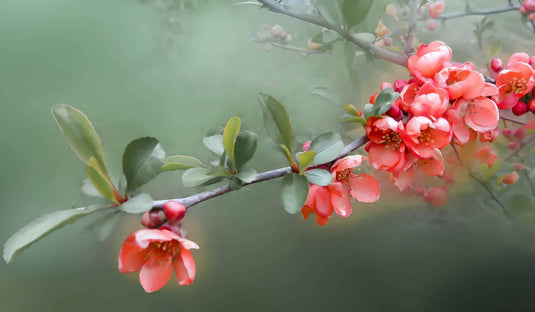
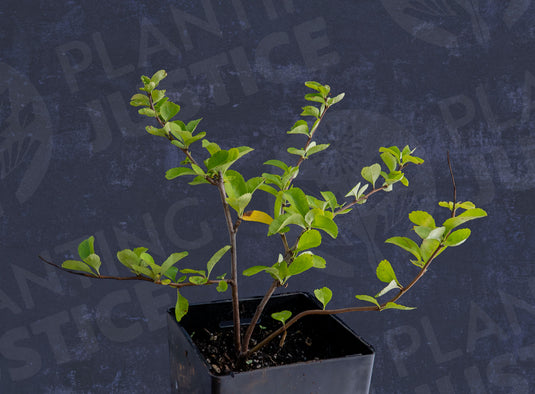
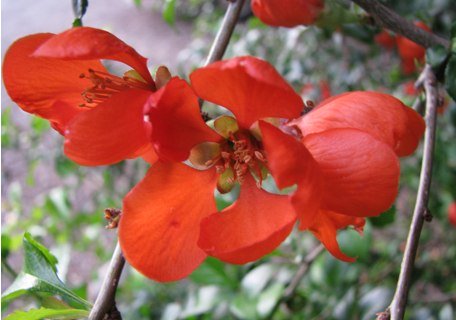
Japanese Flowering Quince are hardy, spreading shrubs that herald spring with spectacular early blooms and later provide fragrant, vitamin C-rich fruits for preserves. These compact plants reach 4-6 feet tall with attractive arching branches that burst into vibrant flowers in late winter to early spring when few other plants are in bloom, offering shades of red, pink, coral, and white.
The showy flowering branches make stunning indoor arrangements, bringing spring beauty inside while still young. Following the blooms, the plants produce hard, fragrant yellow fruits with an intensely aromatic lemon-quince scent - too astringent for fresh eating but exceptional for making traditional jellies, syrups, and preserves with remarkable flavor and pectin content. These tough, adaptable shrubs are remarkably disease and pest resistant, thriving in full sun with well-drained soil and minimal care once established.
The low spreading habit makes them excellent for borders, mass plantings, and barrier hedges where their thorny branches provide security. Flowering quinces require two different varieties for cross-pollination to ensure good fruit set. Hardy across USDA Zones 5-9, these versatile shrubs combine early ornamental impact with productive edible harvests for low-maintenance landscapes.
Flowering Quinces
Japanese Flowering Quince are hardy, spreading shrubs that herald spring with spectacular early blooms and later provide fragrant, vitamin C-rich fruits for preserves. These compact plants reach 4-6 feet tall with attractive arching branches that burst into vibrant flowers in late winter to early spring when few other plants are in bloom, offering shades of red, pink, coral, and white.
The showy flowering branches make stunning indoor arrangements, bringing spring beauty inside while still young. Following the blooms, the plants produce hard, fragrant yellow fruits with an intensely aromatic lemon-quince scent - too astringent for fresh eating but exceptional for making traditional jellies, syrups, and preserves with remarkable flavor and pectin content. These tough, adaptable shrubs are remarkably disease and pest resistant, thriving in full sun with well-drained soil and minimal care once established.
The low spreading habit makes them excellent for borders, mass plantings, and barrier hedges where their thorny branches provide security. Flowering quinces require two different varieties for cross-pollination to ensure good fruit set. Hardy across USDA Zones 5-9, these versatile shrubs combine early ornamental impact with productive edible harvests for low-maintenance landscapes.