Apples
Harriet Tubman, radical abolitionist trailblazer, healer, and freedom fighter, was enslaved on an apple plantation as a child. She made a promise to herself that one day, she would plant her own apple trees for herself, and to share freely with her community. Her ancestors talked about this in many interviews: "[W]hen she bought a piece of land of her own in Auburn, New York, she planted an apple orchard and always had a bowl of apples on her table just for the taking." (see also: An Apple for Harriet Tubman)
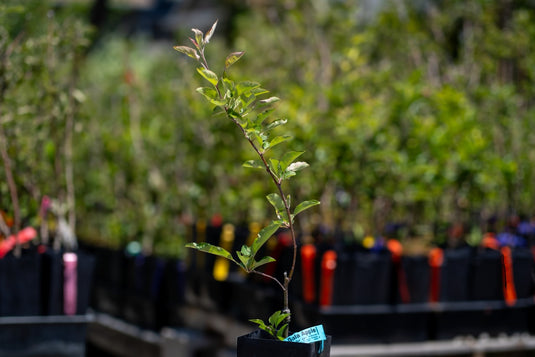
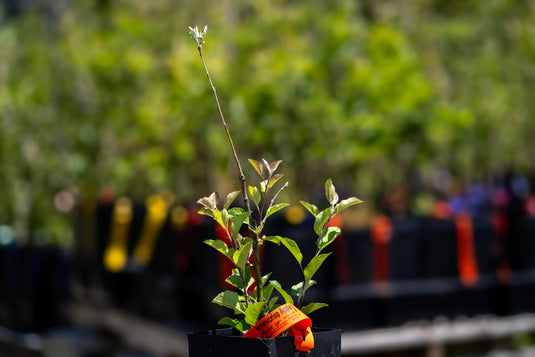
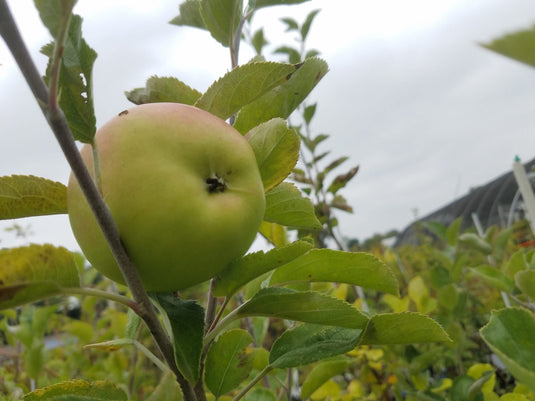
Apples are sturdy, long-lived deciduous trees that have anchored home orchards and homesteads for centuries, offering unmatched versatility in both cultivation and culinary applications. These adaptable trees grow 15-20 feet tall and can be maintained at smaller sizes through regular pruning, thriving across a wide range of climates and soil types. The crisp, flavorful fruits are excellent for fresh eating, baking into pies and crisps, cooking down into applesauce, and pressing into fresh cider - making them among the most useful and beloved of all fruit crops. Most apple varieties require 900-1200 chill hours (temperatures below 45°F) to break dormancy and set fruit properly, making them well-suited to temperate climates with distinct winters.
Many varieties benefit from cross-pollination with another compatible apple for optimal fruit production and quality. Grafted on reliable Emla 111 semi-dwarf rootstock for vigor, disease resistance, and manageable tree size, apples remain the cornerstone of productive edible landscapes and provide decades of bountiful harvests for families and communities.
Apples
Harriet Tubman, radical abolitionist trailblazer, healer, and freedom fighter, was enslaved on an apple plantation as a child. She made a promise to herself that one day, she would plant her own apple trees for herself, and to share freely with her community. Her ancestors talked about this in many interviews: "[W]hen she bought a piece of land of her own in Auburn, New York, she planted an apple orchard and always had a bowl of apples on her table just for the taking." (see also: An Apple for Harriet Tubman)
Apples are sturdy, long-lived deciduous trees that have anchored home orchards and homesteads for centuries, offering unmatched versatility in both cultivation and culinary applications. These adaptable trees grow 15-20 feet tall and can be maintained at smaller sizes through regular pruning, thriving across a wide range of climates and soil types. The crisp, flavorful fruits are excellent for fresh eating, baking into pies and crisps, cooking down into applesauce, and pressing into fresh cider - making them among the most useful and beloved of all fruit crops. Most apple varieties require 900-1200 chill hours (temperatures below 45°F) to break dormancy and set fruit properly, making them well-suited to temperate climates with distinct winters.
Many varieties benefit from cross-pollination with another compatible apple for optimal fruit production and quality. Grafted on reliable Emla 111 semi-dwarf rootstock for vigor, disease resistance, and manageable tree size, apples remain the cornerstone of productive edible landscapes and provide decades of bountiful harvests for families and communities.