Honeyberries
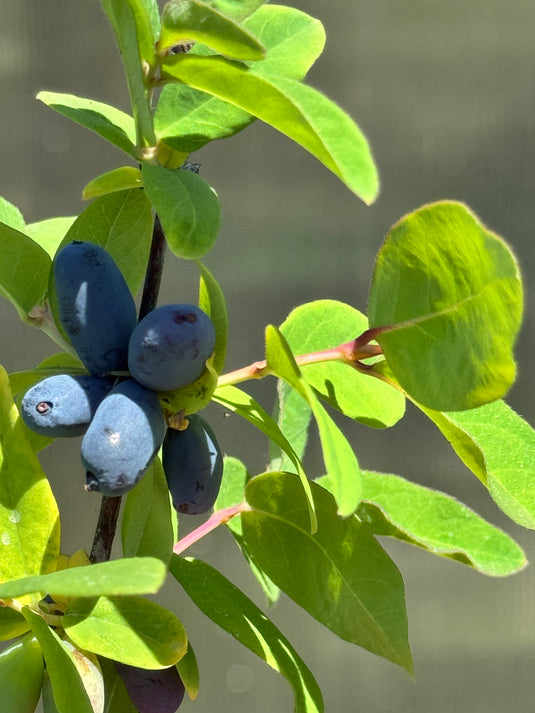
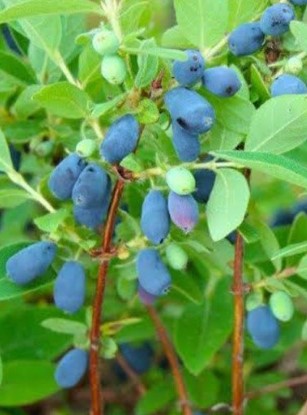
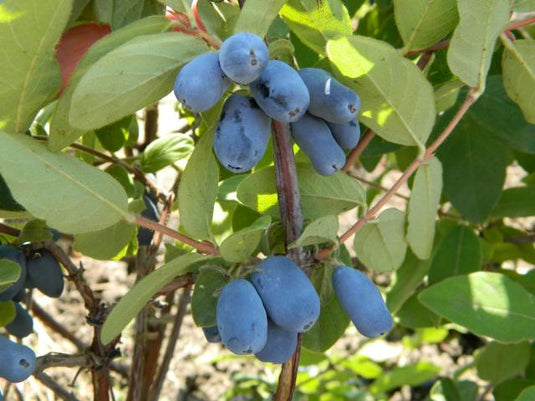
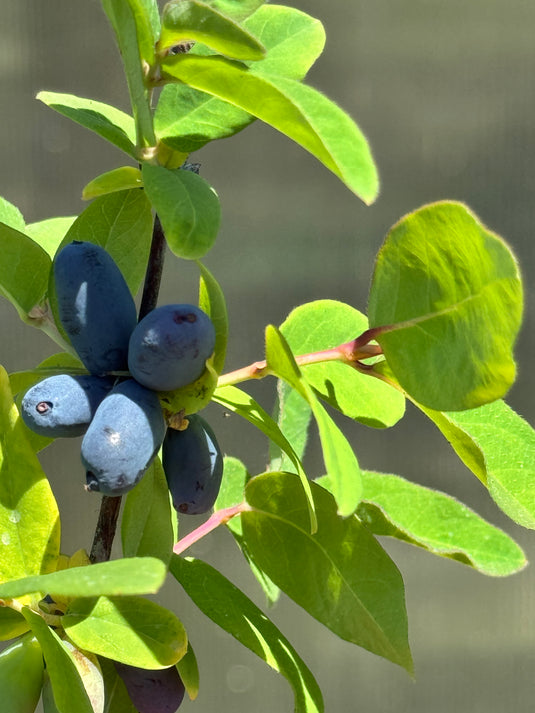
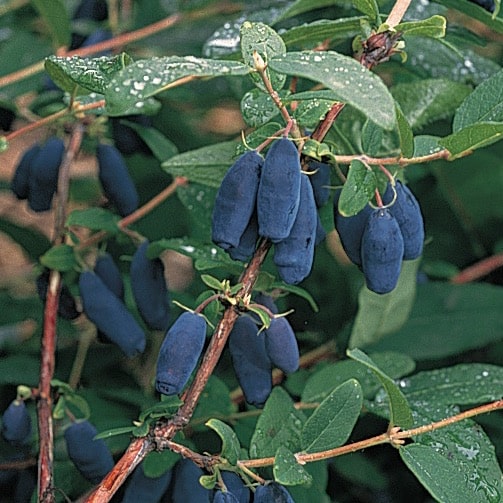
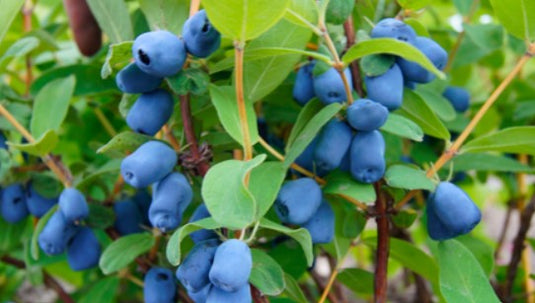
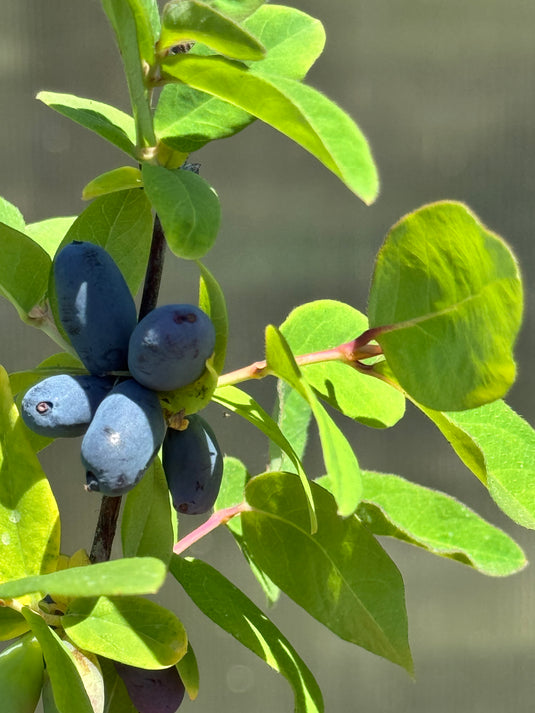
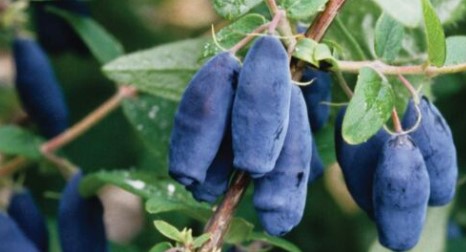
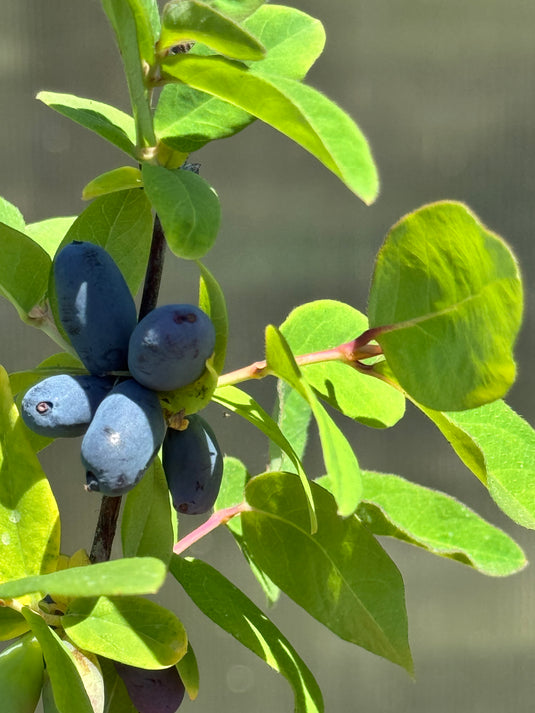
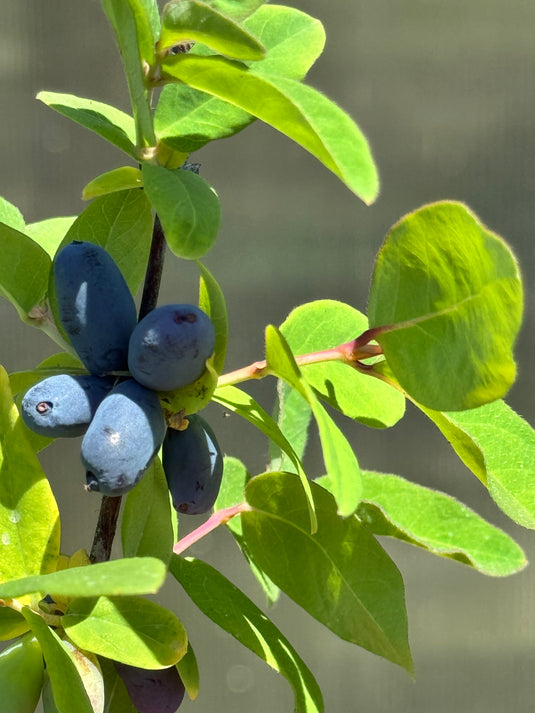
Honeyberries are compact deciduous shrubs in the honeysuckle family, native to Japan and Russia, that produce some of the earliest fruit harvests of the season. These attractive plants reach 4-6 feet tall, bearing oblong blue berries with flavor profiles similar to blueberries but ripening weeks earlier in late spring to early summer.
The sweet-tart fruits are delicious fresh, frozen, or processed into jams, syrups, and baked goods, offering exceptional nutritional value with high antioxidant levels. Remarkably cold-hardy to temperatures of -40°F or lower, honeyberries thrive in northern climates where many fruits struggle and require minimal care with few disease or pest problems once established. The shrubs prefer full sun to partial shade with well-drained, slightly acidic to neutral soil and consistent moisture.
For successful pollination and fruit set, it is essential to plant two compatible varieties from the same bloom group (early or late blooming). Late-blooming varieties are most reliably productive in mild-winter areas, while both early and late types perform well in cold-winter regions. Hardy across USDA Zones 2-7, honeyberries are outstanding choices for northern gardens, edible hedgerows, and permaculture designs seeking early-season fruit production with exceptional cold tolerance.
Honeyberries
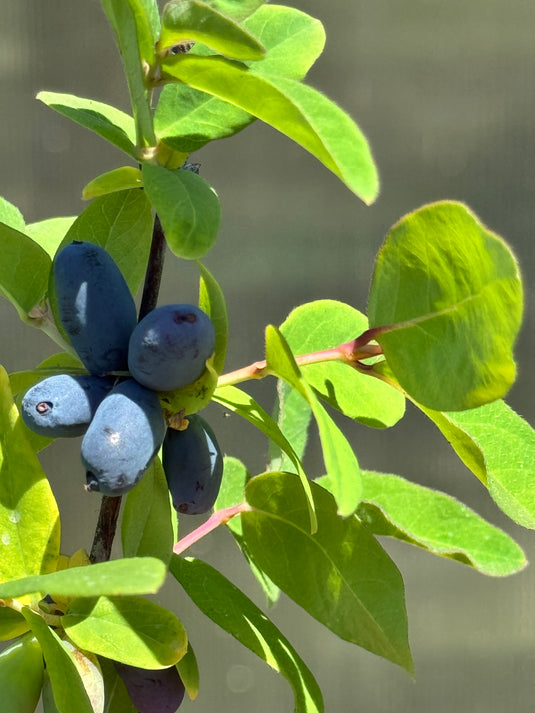
Honeyberries are compact deciduous shrubs in the honeysuckle family, native to Japan and Russia, that produce some of the earliest fruit harvests of the season. These attractive plants reach 4-6 feet tall, bearing oblong blue berries with flavor profiles similar to blueberries but ripening weeks earlier in late spring to early summer.
The sweet-tart fruits are delicious fresh, frozen, or processed into jams, syrups, and baked goods, offering exceptional nutritional value with high antioxidant levels. Remarkably cold-hardy to temperatures of -40°F or lower, honeyberries thrive in northern climates where many fruits struggle and require minimal care with few disease or pest problems once established. The shrubs prefer full sun to partial shade with well-drained, slightly acidic to neutral soil and consistent moisture.
For successful pollination and fruit set, it is essential to plant two compatible varieties from the same bloom group (early or late blooming). Late-blooming varieties are most reliably productive in mild-winter areas, while both early and late types perform well in cold-winter regions. Hardy across USDA Zones 2-7, honeyberries are outstanding choices for northern gardens, edible hedgerows, and permaculture designs seeking early-season fruit production with exceptional cold tolerance.