
hardiness zone
4 - 8
latin name
Vaccinium sect. Cyanococcus
pollination requirements
requires insects to transfer pollen from the anthers of the flower to the stigma.
site and soil
well-drained, acidic soil with full sun to partial shade, ideally on a dry, rocky, or sandy site like a hillside or cliff, where it can tolerate thin soil and occasional drought conditions
Size at Maturity
9-20 in

Hillside Blueberry

Vaccinium sect. Cyanococcus

Regular price $15.00
Sale price $15.00 Regular price
Unit price
/per 
Certification
pot size
This is a pre order item. We will ship it when it comes in stock.

Native wild lowbush blueberry species also known as Blue Ridge Blueberry, Early Lowbush Blueberry, Late Lowbush Blueberry, and Dryland Blueberry. Colonial growth habit, spreading by rhizomes to form clonal colonies. Greenish brown to red bark on stems; smaller twigs may be green, reddish, yellowish or gray. Oval to broadly elliptic leaves with entire or irregularly serrate margins (key difference from V. angustifolium which has regularly serrate leaves). Light green to blue-green foliage with glaucous bloom turns brilliant scarlet or crimson in fall. Extremely drought-tolerant once established.

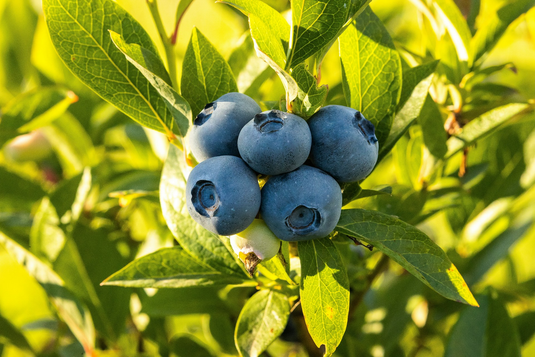
Small edible berries that are polymorphic for color - glaucous blue berries or non-glaucous black berries. Sweet flavor but somewhat bland and mealy according to some sources, though others describe them as having very good and strong flavor. Fruits ripen throughout summer (June-August). Wild blueberries harvested commercially in Alabama, Georgia, Arkansas, and West Virginia. Used fresh, in pies, and for jellies.

Native to central Canada (Ontario) and central/eastern United States from Maine to Wisconsin south to Georgia and Louisiana, plus Ozarks region. Occurs naturally in dry woodlands, oak and chestnut forests, pine barrens, sandy savannas, rocky hillsides, cliffs, balds, disturbed sites like roadsides and abandoned fields. 

hardiness zone
4 - 8
latin name
Vaccinium sect. Cyanococcus
pollination requirements
requires insects to transfer pollen from the anthers of the flower to the stigma.
site and soil
well-drained, acidic soil with full sun to partial shade, ideally on a dry, rocky, or sandy site like a hillside or cliff, where it can tolerate thin soil and occasional drought conditions
Size at Maturity
9-20 in
Donate