
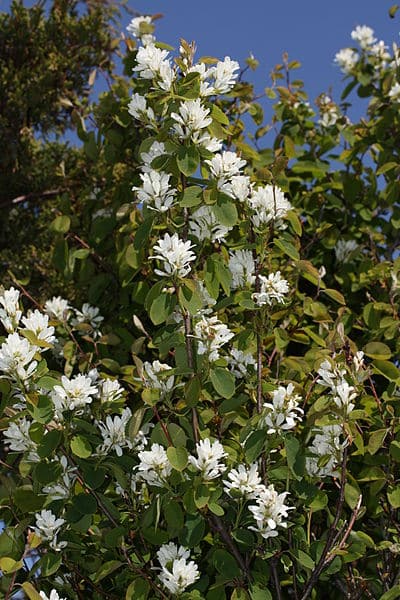
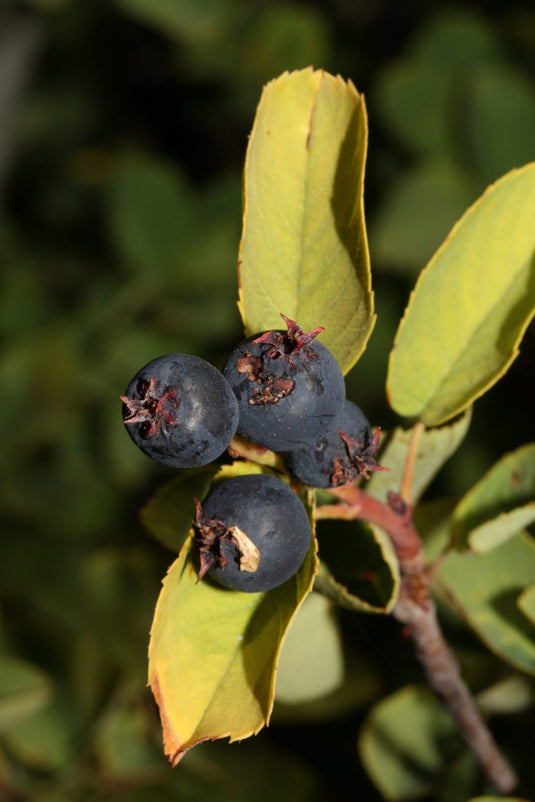
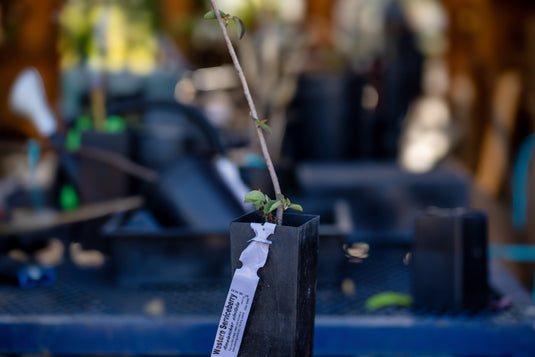
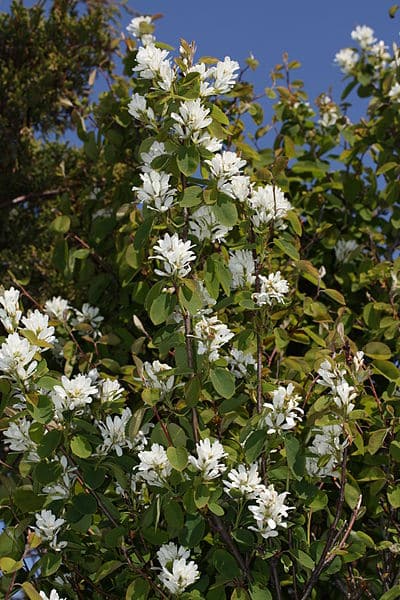
Load image into Gallery viewer, Western Serviceberry (Amelanchier alnifolia)
chill hours
600- 600
hardiness zone
3 - 8
latin name
Amelanchier alnifolia
pollination requirements
self-fertile, although they are primarly pollinated by incests and other pollinators for cross pollination.
site and soil
thrives in full sun to partial shade and prefers well-drained, moist soil, tolerating a range of soil types but avoiding heavy clay.
Size at Maturity
12 ft

Western Serviceberry (Amelanchier alnifolia)

Amelanchier alnifolia

Regular price $15.00
Sale price $15.00 Regular price
Unit price
/per 
Certification
This is a pre order item. We will ship it when it comes in stock.

Amelanchier alnifolia (species, not named cultivar). Deciduous upright suckering shrub. Multi-stemmed, rounded to spreading form. Slow-growing, long-lived (approximately 60 years). Fragrant 5-petaled white star-shaped flowers 1 inch across in compact clusters appear early spring before leaves. Young foliage emerges with reddish/bronze tints, small oval sharply-toothed leaves mature to dark green or bluish-green, turning brilliant orange/yellow/red in fall. Light gray bark with charcoal-gray striations. Prone to cedar-apple rust when planted near cedars/junipers.

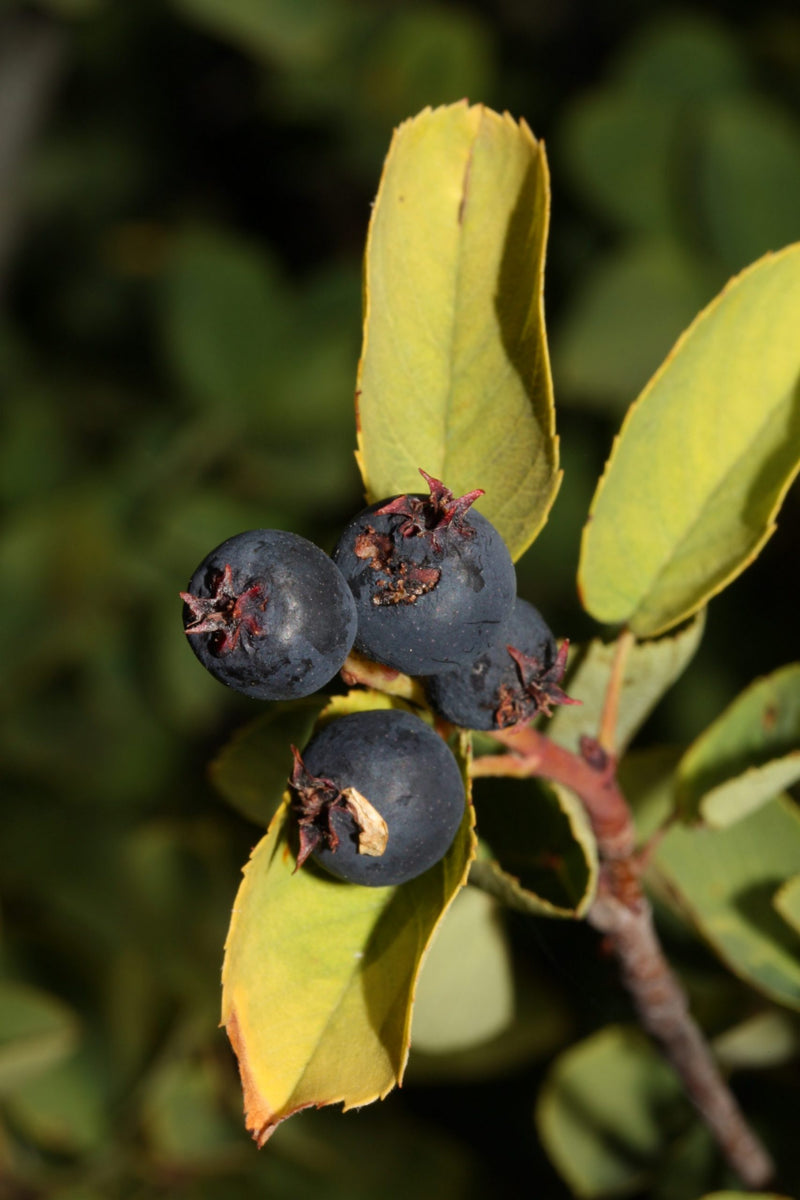
Small round edible berries 1/4-3/8 inch diameter resembling large blueberries. Ripen to dark purplish-black in June-July. Sweet and juicy when fully ripe. Blueberry-like taste, sometimes with nutty almond notes. Used fresh, in jams, jellies, pies, dried for trail snacks, simmered into syrups and wines. Rich in vitamin C, manganese, magnesium, iron, fiber. High pectin content.

Amelanchier alnifolia, the Saskatoon/western/alder-leaved serviceberry species. Native range: southern Alaska to California, east to Dakotas, Nebraska, Colorado, Arizona. Natural habitat: river banks, moist thickets, forests, riparian sites to dry hillsides to alpine heights (5,000-10,000 feet elevation). Important traditional food for Indigenous peoples, added to dried meat for pemmican. At least 26 named cultivars developed. Important for reclamation, wildlife, watersheds, shelterbelt plantings. Common names: saskatoon, juneberry, shadbush, shadblow, sarvisberry, sugarplum, chuckley pear. Name "serviceberry" derives from legend that blooming signaled ground thawed enough for spring burial services in New England settlements.

chill hours
600- 600
hardiness zone
3 - 8
latin name
Amelanchier alnifolia
pollination requirements
self-fertile, although they are primarly pollinated by incests and other pollinators for cross pollination.
site and soil
thrives in full sun to partial shade and prefers well-drained, moist soil, tolerating a range of soil types but avoiding heavy clay.
Size at Maturity
12 ft
Donate