Prickly Pear
Extremely valuable desert cacti native to the US, Mexico and down south through South America, prickly pear are also extensively grown in many other parts of the world including the Mediterranean region, Australia and Africa. Virtually every part of the plant is edible, fruit, pads and seeds which can be ground into flour. The fibers are made into baskets and the sap is added to plaster and mortar to add strength.
The fruits are called prickly pears, tunas, Indian pear or Indian fig are sweet and succulent. The flavor is often compared to a mixture of strawberries, fig, watermelon, honeydew and citrus, with a lot of flavor diversity amongst the different species and varieties. They are eaten fresh and made into jams, juices, wine and in baking. The pads can be cooked into a very healthy vegetable similar in taste to green beans.
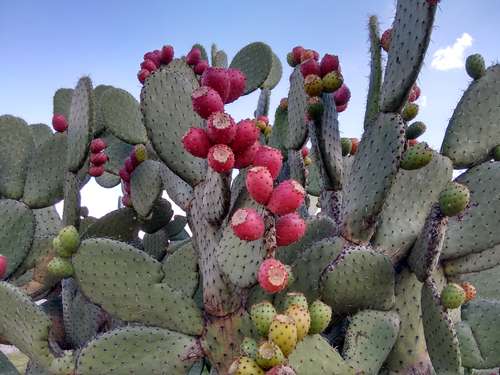
Plants are very attractive with unique large pads jutting out at different angles, very showy large, but delicate flowers in the spring and pretty gold, red or purple fruit adorning the plant in the fall and winter. While it can take prolonged drought it grows best with occasional summer irrigation and some fertilizer feedings during the growing season, especially when young. They are grown commercially on a large scale in Mexico and the Mediteranean region with a growing number of farms growing them in the US now too. Hardy zones 7 or 8-11, depending on the variety.
Prickly Pear
Extremely valuable desert cacti native to the US, Mexico and down south through South America, prickly pear are also extensively grown in many other parts of the world including the Mediterranean region, Australia and Africa. Virtually every part of the plant is edible, fruit, pads and seeds which can be ground into flour. The fibers are made into baskets and the sap is added to plaster and mortar to add strength.
The fruits are called prickly pears, tunas, Indian pear or Indian fig are sweet and succulent. The flavor is often compared to a mixture of strawberries, fig, watermelon, honeydew and citrus, with a lot of flavor diversity amongst the different species and varieties. They are eaten fresh and made into jams, juices, wine and in baking. The pads can be cooked into a very healthy vegetable similar in taste to green beans.
Plants are very attractive with unique large pads jutting out at different angles, very showy large, but delicate flowers in the spring and pretty gold, red or purple fruit adorning the plant in the fall and winter. While it can take prolonged drought it grows best with occasional summer irrigation and some fertilizer feedings during the growing season, especially when young. They are grown commercially on a large scale in Mexico and the Mediteranean region with a growing number of farms growing them in the US now too. Hardy zones 7 or 8-11, depending on the variety.