Red Currants (Ribes rubrum)
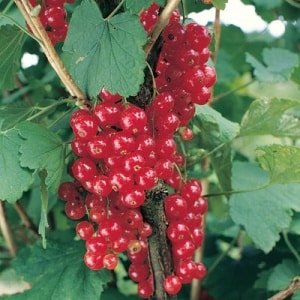
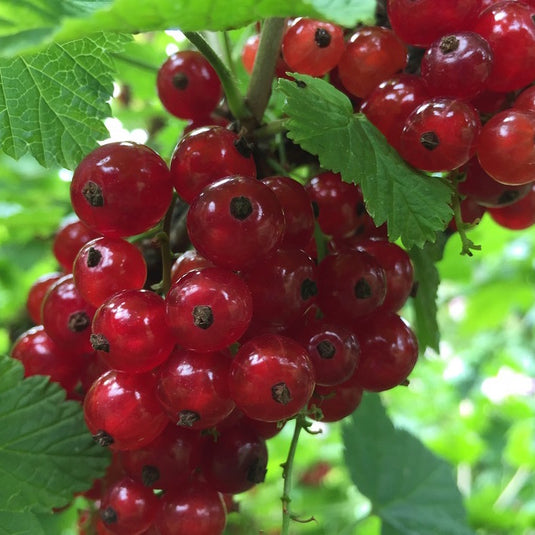
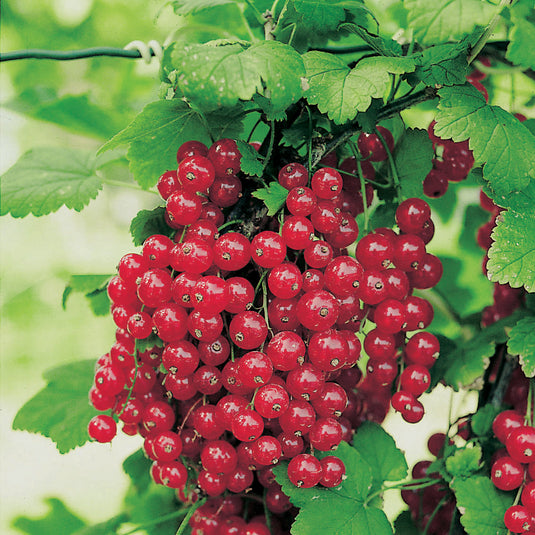
Red Currants are remarkably easy-to-grow deciduous shrubs that combine exceptional disease resistance with prolific production of jewel-like berries. These hardy bushes reach approximately 5 feet tall and wide, producing abundant clusters of translucent red fruits with pleasant sweet-tart flavor perfect for classic jellies, juices, wines, and cooked desserts.
The beautiful red berries hang on the bush for an extended period, allowing for prolonged fresh eating and creating outstanding ornamental value in the landscape. Red currants are traditionally added to cranberry sauce (often with finely chopped quince) and shine in European preparations like red currant jelly and traditional summer puddings. High in vitamin C and beneficial antioxidants, these nutritious berries offer both culinary versatility and health benefits. The attractive lobed foliage turns warm fall colors, extending ornamental interest beyond the fruiting season. Exceptionally cold-hardy and shade-tolerant, red currants thrive in cooler climates where many fruits struggle, adapting well to partial shade under fruit trees or along north-facing walls.
Self-fertile and requiring minimal care once established, these reliable producers begin bearing in their second or third year and continue for decades. Hardy across USDA Zones 4-8, red currants are ideal for edible hedgerows, northern gardens, and permaculture designs seeking low-maintenance berry crops with excellent disease resistance.
Red Currants (Ribes rubrum)
Red Currants are remarkably easy-to-grow deciduous shrubs that combine exceptional disease resistance with prolific production of jewel-like berries. These hardy bushes reach approximately 5 feet tall and wide, producing abundant clusters of translucent red fruits with pleasant sweet-tart flavor perfect for classic jellies, juices, wines, and cooked desserts.
The beautiful red berries hang on the bush for an extended period, allowing for prolonged fresh eating and creating outstanding ornamental value in the landscape. Red currants are traditionally added to cranberry sauce (often with finely chopped quince) and shine in European preparations like red currant jelly and traditional summer puddings. High in vitamin C and beneficial antioxidants, these nutritious berries offer both culinary versatility and health benefits. The attractive lobed foliage turns warm fall colors, extending ornamental interest beyond the fruiting season. Exceptionally cold-hardy and shade-tolerant, red currants thrive in cooler climates where many fruits struggle, adapting well to partial shade under fruit trees or along north-facing walls.
Self-fertile and requiring minimal care once established, these reliable producers begin bearing in their second or third year and continue for decades. Hardy across USDA Zones 4-8, red currants are ideal for edible hedgerows, northern gardens, and permaculture designs seeking low-maintenance berry crops with excellent disease resistance.