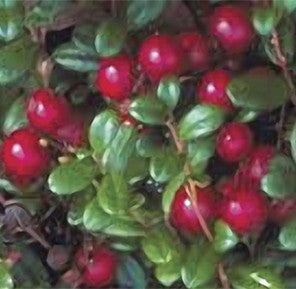
Lingonberries (Vaccinium vitus-idaea)
Lingonberries are low-growing evergreen groundcovers native to Scandinavia and northern regions, prized for their tart red berries and remarkable cold hardiness. These compact plants reach just 6-12 inches tall, spreading slowly through underground rhizomes to form attractive mats of small, glossy dark green leaves that provide year-round interest. Delicate pink or white bell-shaped flowers appear in spring, followed by bright red berries in late summer that persist into fall and even winter.
The tart, cranberry-like fruits are too astringent for fresh eating but make exceptional jams, sauces, syrups, and traditional Scandinavian preserves, offering complex flavor prized throughout Northern Europe. Rich in antioxidants and vitamin C, lingonberries are a staple in Swedish, Norwegian, and Finnish cuisine, famously served alongside meatballs and game dishes. These hardy plants thrive in acidic, well-drained soils with consistent moisture and cool growing conditions, preferring full sun to partial shade.
Self-fertile and producing twice annually in optimal conditions (spring and fall crops), lingonberries tolerate extreme cold to Zone 2 and perform best in northern climates or cool coastal regions. Ideal for acidic groundcover plantings, woodland edges, and rock gardens where their compact habit, evergreen foliage, and productive harvests create beautiful, low-maintenance edible landscapes.
Lingonberries (Vaccinium vitus-idaea)
Lingonberries are low-growing evergreen groundcovers native to Scandinavia and northern regions, prized for their tart red berries and remarkable cold hardiness. These compact plants reach just 6-12 inches tall, spreading slowly through underground rhizomes to form attractive mats of small, glossy dark green leaves that provide year-round interest. Delicate pink or white bell-shaped flowers appear in spring, followed by bright red berries in late summer that persist into fall and even winter.
The tart, cranberry-like fruits are too astringent for fresh eating but make exceptional jams, sauces, syrups, and traditional Scandinavian preserves, offering complex flavor prized throughout Northern Europe. Rich in antioxidants and vitamin C, lingonberries are a staple in Swedish, Norwegian, and Finnish cuisine, famously served alongside meatballs and game dishes. These hardy plants thrive in acidic, well-drained soils with consistent moisture and cool growing conditions, preferring full sun to partial shade.
Self-fertile and producing twice annually in optimal conditions (spring and fall crops), lingonberries tolerate extreme cold to Zone 2 and perform best in northern climates or cool coastal regions. Ideal for acidic groundcover plantings, woodland edges, and rock gardens where their compact habit, evergreen foliage, and productive harvests create beautiful, low-maintenance edible landscapes.