Chestnuts
Chestnuts are majestic, spreading deciduous trees that have sustained cultures worldwide for centuries, offering both landscape beauty and abundant harvests of sweet, meaty nuts. These hardy, long-lived trees are remarkably drought-tolerant once established and can produce up to 200 pounds of nuts annually at maturity, making them among the most productive nut crops for home orchards and food forests.
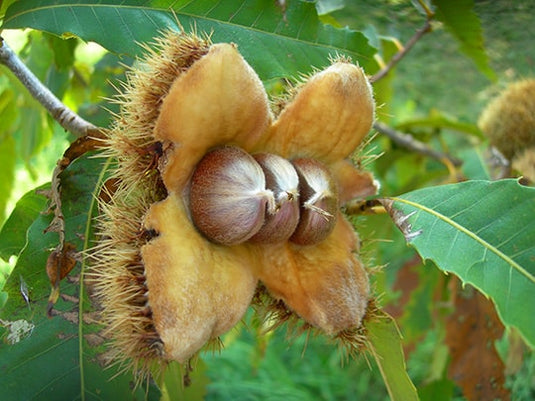
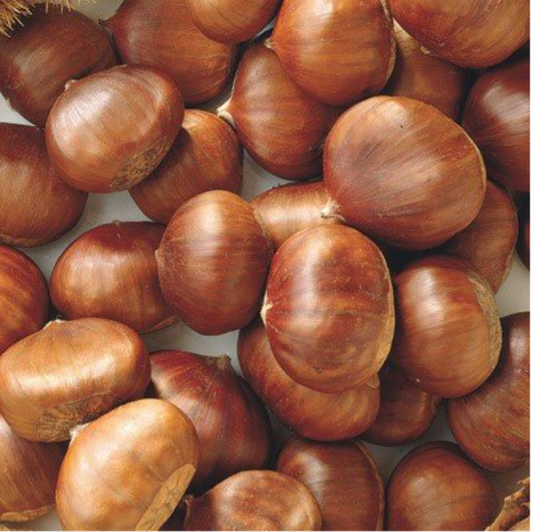
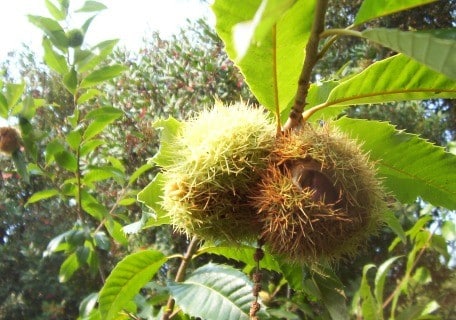
The nuts are prized roasted as a gourmet delicacy, added to stuffings and baked goods, ground into gluten-free flour, or used as nutritious livestock feed. Chestnuts bloom late in the season, avoiding spring frosts that damage early-flowering trees, and produce reliable crops of nuts protected within spiny husks that deter squirrels until harvest. When ripe in fall, the nuts drop naturally to the ground, often falling free of their husks for easy collection.
These adaptable trees thrive in most well-drained soil types and establish into commanding specimens with broad, spreading canopies. Some varieties are pollen-sterile and require a compatible pollinator tree for nut production. Suitable for USDA Zones 5-9, chestnuts are outstanding choices for large landscapes, permaculture designs, and multi-generational plantings seeking both ornamental impact and substantial food production.
Chestnuts
Chestnuts are majestic, spreading deciduous trees that have sustained cultures worldwide for centuries, offering both landscape beauty and abundant harvests of sweet, meaty nuts. These hardy, long-lived trees are remarkably drought-tolerant once established and can produce up to 200 pounds of nuts annually at maturity, making them among the most productive nut crops for home orchards and food forests.
The nuts are prized roasted as a gourmet delicacy, added to stuffings and baked goods, ground into gluten-free flour, or used as nutritious livestock feed. Chestnuts bloom late in the season, avoiding spring frosts that damage early-flowering trees, and produce reliable crops of nuts protected within spiny husks that deter squirrels until harvest. When ripe in fall, the nuts drop naturally to the ground, often falling free of their husks for easy collection.
These adaptable trees thrive in most well-drained soil types and establish into commanding specimens with broad, spreading canopies. Some varieties are pollen-sterile and require a compatible pollinator tree for nut production. Suitable for USDA Zones 5-9, chestnuts are outstanding choices for large landscapes, permaculture designs, and multi-generational plantings seeking both ornamental impact and substantial food production.