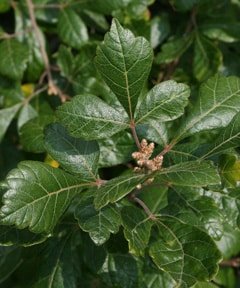
Sumac
Sumacs are striking native shrubs and small trees valued for their spectacular fall colors, edible fruits, and remarkable adaptability to challenging sites. These hardy plants reach 10-25 feet tall depending on species, featuring dramatic compound leaves that transform into brilliant shades of orange, red, and purple in fall, creating some of autumn's most vibrant displays.
The fuzzy, cone-shaped clusters of deep red fruits (drupes) persist through winter, providing critical food for birds and wildlife while adding ornamental interest to dormant landscapes. The tart, lemony fruits are rich in vitamin C and used to make refreshing "sumac-ade" (similar to lemonade), ground into a tangy Middle Eastern spice, or used in traditional herbal preparations. Sumacs spread through root suckers to form attractive colonies ideal for erosion control on slopes, naturalizing in difficult areas, or creating wildlife thickets. Remarkably drought-tolerant and adaptable to poor, dry soils where other plants struggle, sumacs thrive in full sun with minimal care once established.
These tough natives demonstrate excellent pest and disease resistance while supporting beneficial insects and providing valuable habitat. Hardy across USDA Zones 3-9, sumacs are perfect for native landscapes, restoration projects, wildlife gardens, and anyone seeking low-maintenance plants with stunning fall color, edible harvests, and ecological benefits.
Sumac
Sumacs are striking native shrubs and small trees valued for their spectacular fall colors, edible fruits, and remarkable adaptability to challenging sites. These hardy plants reach 10-25 feet tall depending on species, featuring dramatic compound leaves that transform into brilliant shades of orange, red, and purple in fall, creating some of autumn's most vibrant displays.
The fuzzy, cone-shaped clusters of deep red fruits (drupes) persist through winter, providing critical food for birds and wildlife while adding ornamental interest to dormant landscapes. The tart, lemony fruits are rich in vitamin C and used to make refreshing "sumac-ade" (similar to lemonade), ground into a tangy Middle Eastern spice, or used in traditional herbal preparations. Sumacs spread through root suckers to form attractive colonies ideal for erosion control on slopes, naturalizing in difficult areas, or creating wildlife thickets. Remarkably drought-tolerant and adaptable to poor, dry soils where other plants struggle, sumacs thrive in full sun with minimal care once established.
These tough natives demonstrate excellent pest and disease resistance while supporting beneficial insects and providing valuable habitat. Hardy across USDA Zones 3-9, sumacs are perfect for native landscapes, restoration projects, wildlife gardens, and anyone seeking low-maintenance plants with stunning fall color, edible harvests, and ecological benefits.