Ginkgo (Ginkgo biloba)
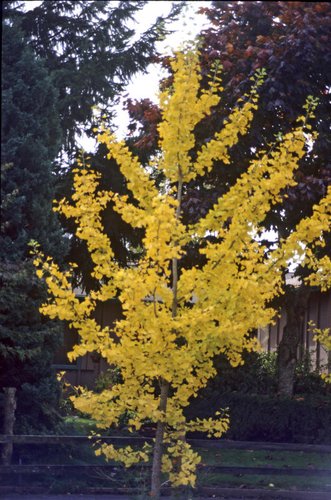
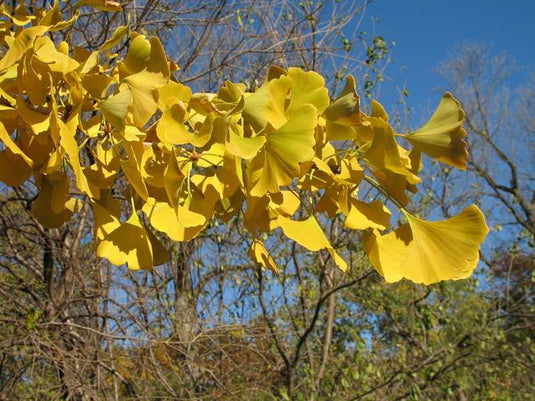
Ginkgo is a living fossil! This is the oldest surviving broadleaf tree species that flourished 200 million years ago alongside dinosaurs and now stands as one of the most resilient and beautiful trees for modern landscapes. These stately deciduous trees feature distinctive fan-shaped leaves that emerge bright green in spring and transform into luminescent golden yellow in fall, creating one of autumn's most spectacular displays.
Slow and steady growers eventually reaching 35-70 feet tall, ginkgos develop attractive winter branching patterns and remarkable tolerance for urban conditions, thriving in poor soils, air pollution, and confined spaces that challenge most other trees. The edible nuts, highly prized throughout Asia for their delicate flavor when roasted or boiled, develop on female trees and are approximately 1 inch long.
However, the fleshy outer fruit coating can produce a strong, unpleasant odor if allowed to fall and decompose, so female trees should be sited away from high-traffic areas unless nuts will be harvested promptly. Both male and female trees are needed for nut production. The leaves and nuts have traditional use in herbal medicine for memory support and cognitive function. Available as unsexed seedlings or grafted male and female varieties, ginkgos are exceptionally long-lived, virtually pest-free trees suitable for USDA Zones 4-9.
Ginkgo (Ginkgo biloba)
Ginkgo is a living fossil! This is the oldest surviving broadleaf tree species that flourished 200 million years ago alongside dinosaurs and now stands as one of the most resilient and beautiful trees for modern landscapes. These stately deciduous trees feature distinctive fan-shaped leaves that emerge bright green in spring and transform into luminescent golden yellow in fall, creating one of autumn's most spectacular displays.
Slow and steady growers eventually reaching 35-70 feet tall, ginkgos develop attractive winter branching patterns and remarkable tolerance for urban conditions, thriving in poor soils, air pollution, and confined spaces that challenge most other trees. The edible nuts, highly prized throughout Asia for their delicate flavor when roasted or boiled, develop on female trees and are approximately 1 inch long.
However, the fleshy outer fruit coating can produce a strong, unpleasant odor if allowed to fall and decompose, so female trees should be sited away from high-traffic areas unless nuts will be harvested promptly. Both male and female trees are needed for nut production. The leaves and nuts have traditional use in herbal medicine for memory support and cognitive function. Available as unsexed seedlings or grafted male and female varieties, ginkgos are exceptionally long-lived, virtually pest-free trees suitable for USDA Zones 4-9.