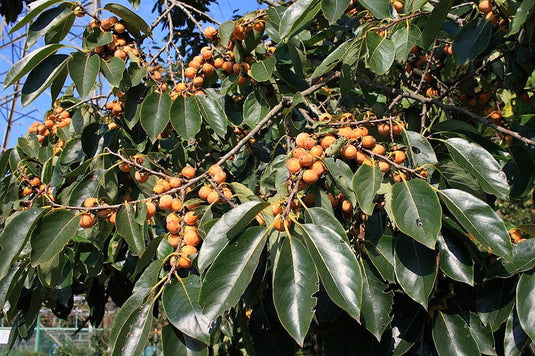
Persimmons
Persimmons are the most widely cultivated fruit in Asia, offering exceptional late-season harvests and outstanding ornamental beauty for temperate gardens. These deciduous trees reach 15-20 feet tall with large, glossy bright green leaves that transform into spectacular displays of gold, orange, and crimson in late fall.
The bright orange fruits hang dramatically on bare branches long after leaf drop, creating stunning winter interest and providing fresh harvests when few other fruits are available. Remarkably pest-free and easy to grow, persimmons adapt to many soil types as long as drainage is adequate, thriving with minimal care once established. The fruits ripen in fall with sweet, soft, pudding-like flesh perfect for fresh eating, drying, or cooking into traditional persimmon puddings and desserts. Trees bloom late in the season, avoiding spring frosts and producing reliably without the need for pollination.
All varieties set seedless fruit parthenocarpically unless pollinated by the Chocolate variety, which has male flowers and produces seeded fruits with deeper flavor and firmer texture. Trees can be maintained at smaller sizes through pruning for easier harvests. Grafted on reliable Lotus rootstock for vigor and adaptability, persimmons are hardy across USDA Zones 7-11 and ideal for edible landscapes seeking both ornamental impact and delicious late-season gourmet fruits.
Persimmons
Persimmons are the most widely cultivated fruit in Asia, offering exceptional late-season harvests and outstanding ornamental beauty for temperate gardens. These deciduous trees reach 15-20 feet tall with large, glossy bright green leaves that transform into spectacular displays of gold, orange, and crimson in late fall.
The bright orange fruits hang dramatically on bare branches long after leaf drop, creating stunning winter interest and providing fresh harvests when few other fruits are available. Remarkably pest-free and easy to grow, persimmons adapt to many soil types as long as drainage is adequate, thriving with minimal care once established. The fruits ripen in fall with sweet, soft, pudding-like flesh perfect for fresh eating, drying, or cooking into traditional persimmon puddings and desserts. Trees bloom late in the season, avoiding spring frosts and producing reliably without the need for pollination.
All varieties set seedless fruit parthenocarpically unless pollinated by the Chocolate variety, which has male flowers and produces seeded fruits with deeper flavor and firmer texture. Trees can be maintained at smaller sizes through pruning for easier harvests. Grafted on reliable Lotus rootstock for vigor and adaptability, persimmons are hardy across USDA Zones 7-11 and ideal for edible landscapes seeking both ornamental impact and delicious late-season gourmet fruits.