Locust
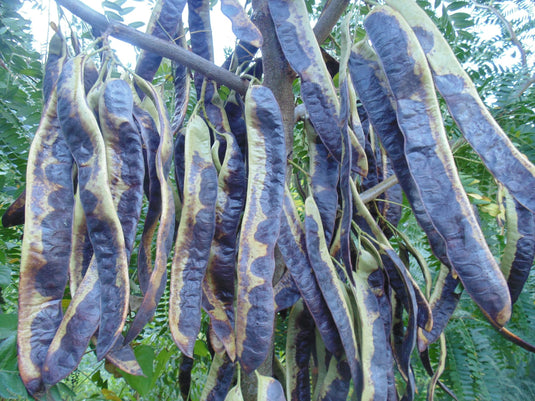
Locust trees are fast-growing, nitrogen-fixing deciduous trees valued for their fragrant spring blooms, durable timber, and important role in permaculture and agroforestry systems. This group includes Black Locust (Robinia pseudoacacia) with its clusters of white, pea-like flowers and edible blossoms, and Honey Locust (Gleditsia triacanthos) known for its feathery foliage and sweet seed pods.
Black locust produces some of the most fragrant flowers of any tree, with blooms that can be eaten fresh in salads or fried as fritters, offering a sweet pea flavor in late spring. Both species grow rapidly into substantial shade trees reaching 40-80 feet tall, providing filtered shade that allows understory plantings to thrive beneath their canopies. As members of the legume family, locusts fix atmospheric nitrogen through root nodules, enriching surrounding soil and supporting companion plants in food forests and guild plantings.
The extremely dense, rot-resistant wood is prized for fence posts, outdoor furniture, and firewood, lasting decades in ground contact. Locusts adapt to poor soils, drought, and challenging sites where other trees struggle, making them valuable for reclamation projects and marginal lands. Hardy across USDA Zones 3-9, these multi-functional trees combine rapid growth, soil improvement, edible harvests, and valuable timber for sustainable landscapes and productive homesteads.
Locust
Locust trees are fast-growing, nitrogen-fixing deciduous trees valued for their fragrant spring blooms, durable timber, and important role in permaculture and agroforestry systems. This group includes Black Locust (Robinia pseudoacacia) with its clusters of white, pea-like flowers and edible blossoms, and Honey Locust (Gleditsia triacanthos) known for its feathery foliage and sweet seed pods.
Black locust produces some of the most fragrant flowers of any tree, with blooms that can be eaten fresh in salads or fried as fritters, offering a sweet pea flavor in late spring. Both species grow rapidly into substantial shade trees reaching 40-80 feet tall, providing filtered shade that allows understory plantings to thrive beneath their canopies. As members of the legume family, locusts fix atmospheric nitrogen through root nodules, enriching surrounding soil and supporting companion plants in food forests and guild plantings.
The extremely dense, rot-resistant wood is prized for fence posts, outdoor furniture, and firewood, lasting decades in ground contact. Locusts adapt to poor soils, drought, and challenging sites where other trees struggle, making them valuable for reclamation projects and marginal lands. Hardy across USDA Zones 3-9, these multi-functional trees combine rapid growth, soil improvement, edible harvests, and valuable timber for sustainable landscapes and productive homesteads.