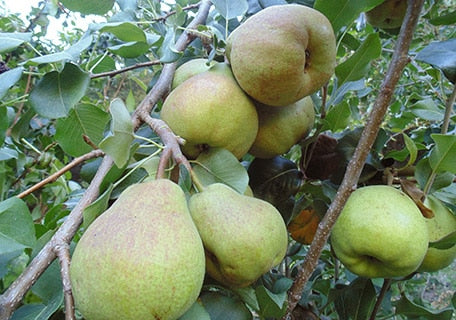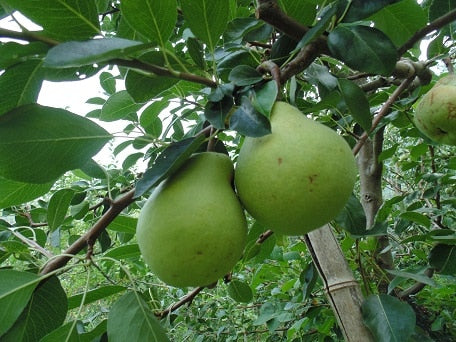
Pears, European (Pyrus communis)
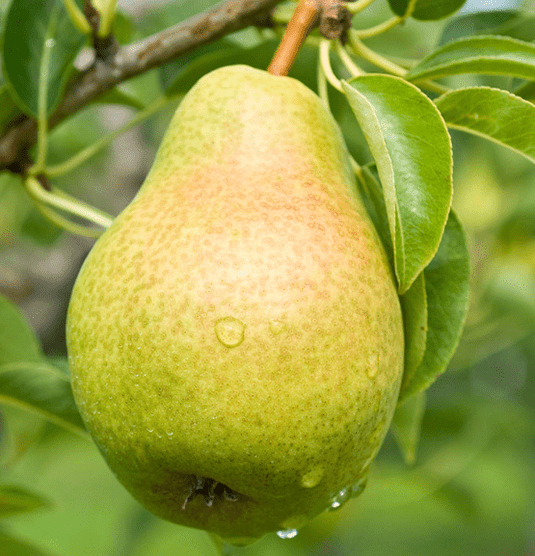
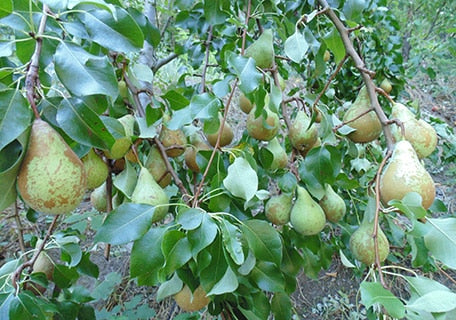
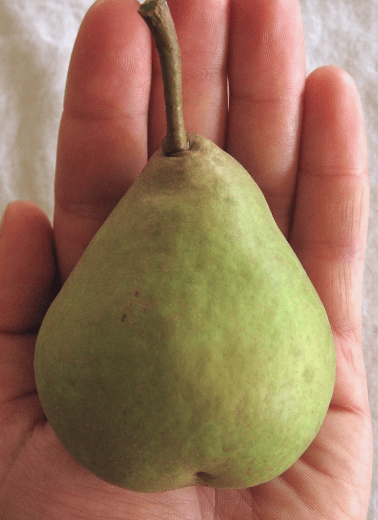
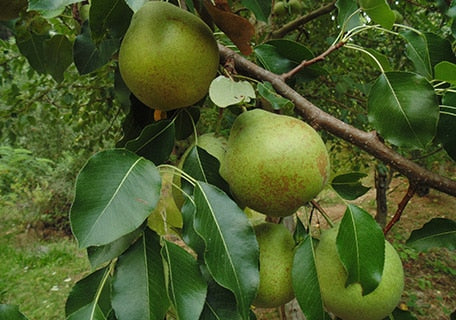
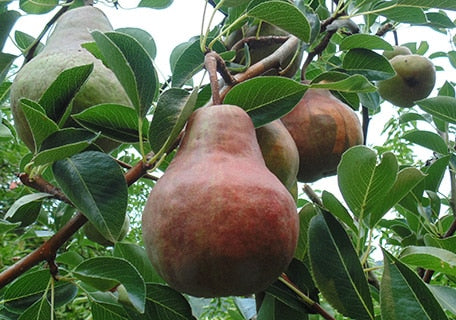
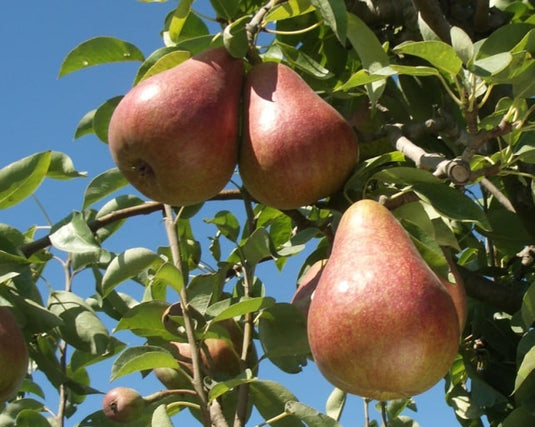
European Pears are strong, long-lived deciduous trees that combine reliable production with exceptional fruit quality and easy cultivation. These beautiful trees display showy white blossoms in spring and gorgeous fall colors late in the season, creating year-round ornamental interest alongside their productive harvests. Homegrown European pears develop a melting, sweet, rich flavor with buttery texture that far surpasses store-bought fruit, perfect for fresh eating, canning, and drying.
Unlike most fruits, European pears must be picked before fully soft and ripened off the tree in a cool location to achieve their signature smooth texture. Harvest when the stem easily separates from the branch, typically in late summer to fall depending on variety. Pears are better adapted to heavier, wetter soils than most fruit trees, thriving in clay conditions that challenge apples and stone fruits, though they cannot tolerate waterlogged or poorly drained sites. The trees reach 20-25 feet on standard seedling rootstock, developing into substantial shade trees with decades or even centuries of productive life.
Two varieties are needed for cross-pollination and optimal fruit set. Hardy across USDA Zones 4-9, European pears are outstanding choices for home orchards, edible landscapes, and anyone seeking low-maintenance, long-lived fruit trees with superior flavor and adaptability.
Pears, European (Pyrus communis)
European Pears are strong, long-lived deciduous trees that combine reliable production with exceptional fruit quality and easy cultivation. These beautiful trees display showy white blossoms in spring and gorgeous fall colors late in the season, creating year-round ornamental interest alongside their productive harvests. Homegrown European pears develop a melting, sweet, rich flavor with buttery texture that far surpasses store-bought fruit, perfect for fresh eating, canning, and drying.
Unlike most fruits, European pears must be picked before fully soft and ripened off the tree in a cool location to achieve their signature smooth texture. Harvest when the stem easily separates from the branch, typically in late summer to fall depending on variety. Pears are better adapted to heavier, wetter soils than most fruit trees, thriving in clay conditions that challenge apples and stone fruits, though they cannot tolerate waterlogged or poorly drained sites. The trees reach 20-25 feet on standard seedling rootstock, developing into substantial shade trees with decades or even centuries of productive life.
Two varieties are needed for cross-pollination and optimal fruit set. Hardy across USDA Zones 4-9, European pears are outstanding choices for home orchards, edible landscapes, and anyone seeking low-maintenance, long-lived fruit trees with superior flavor and adaptability.