Pears
Pears are long-lived deciduous fruit trees prized for their sweet, juicy fruits, beautiful spring blossoms, and reliable production across diverse climates. These attractive trees reach 15-25 feet tall with upright forms, glossy foliage, and clouds of white flowers in early spring that create stunning ornamental displays.
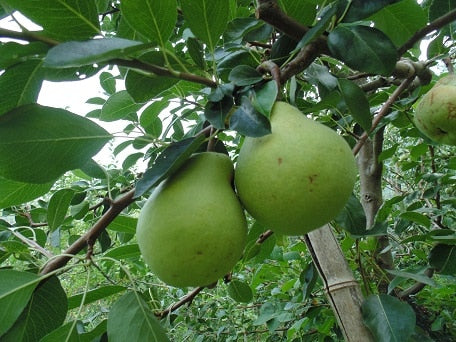
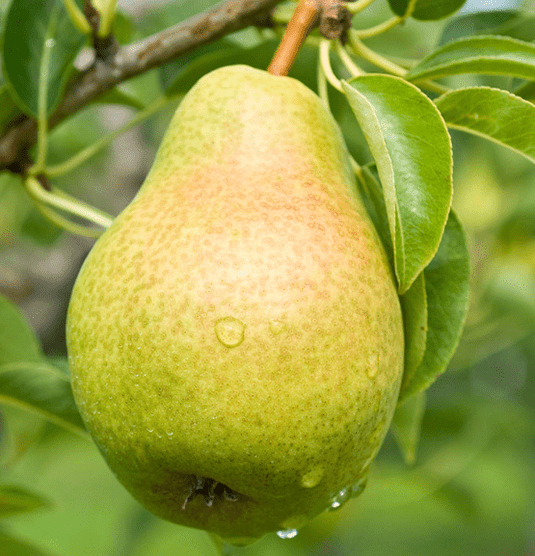
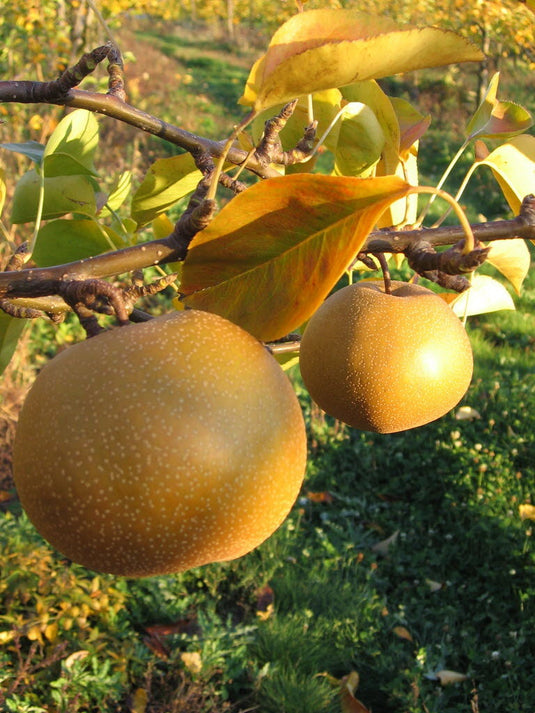
The fruits range from classic European pears with smooth, buttery texture to crisp Asian pears with apple-like crunch, offering options for fresh eating, canning, baking, and preserving. European pears require post-harvest ripening off the tree to develop their signature melt-in-your-mouth texture, while Asian pears are ready to eat directly from the branch. Pears are remarkably disease-resistant compared to apples and adapt to a wider range of soil types, thriving in heavy clay that challenges other fruits. Most varieties require cross-pollination with another compatible pear for optimal fruit set, though a few are self-fertile.
The trees are slower to begin bearing than stone fruits but exceptionally long-lived, often producing for 50-75 years or more once established. Hardy across USDA Zones 4-9 depending on variety, pears are outstanding choices for home orchards, edible landscapes, and anyone seeking low-maintenance fruit trees with multi-generational productivity and timeless appeal.
Pears


Pears are long-lived deciduous fruit trees prized for their sweet, juicy fruits, beautiful spring blossoms, and reliable production across diverse climates. These attractive trees reach 15-25 feet tall with upright forms, glossy foliage, and clouds of white flowers in early spring that create stunning ornamental displays.
The fruits range from classic European pears with smooth, buttery texture to crisp Asian pears with apple-like crunch, offering options for fresh eating, canning, baking, and preserving. European pears require post-harvest ripening off the tree to develop their signature melt-in-your-mouth texture, while Asian pears are ready to eat directly from the branch. Pears are remarkably disease-resistant compared to apples and adapt to a wider range of soil types, thriving in heavy clay that challenges other fruits. Most varieties require cross-pollination with another compatible pear for optimal fruit set, though a few are self-fertile.
The trees are slower to begin bearing than stone fruits but exceptionally long-lived, often producing for 50-75 years or more once established. Hardy across USDA Zones 4-9 depending on variety, pears are outstanding choices for home orchards, edible landscapes, and anyone seeking low-maintenance fruit trees with multi-generational productivity and timeless appeal.